 EN
EN


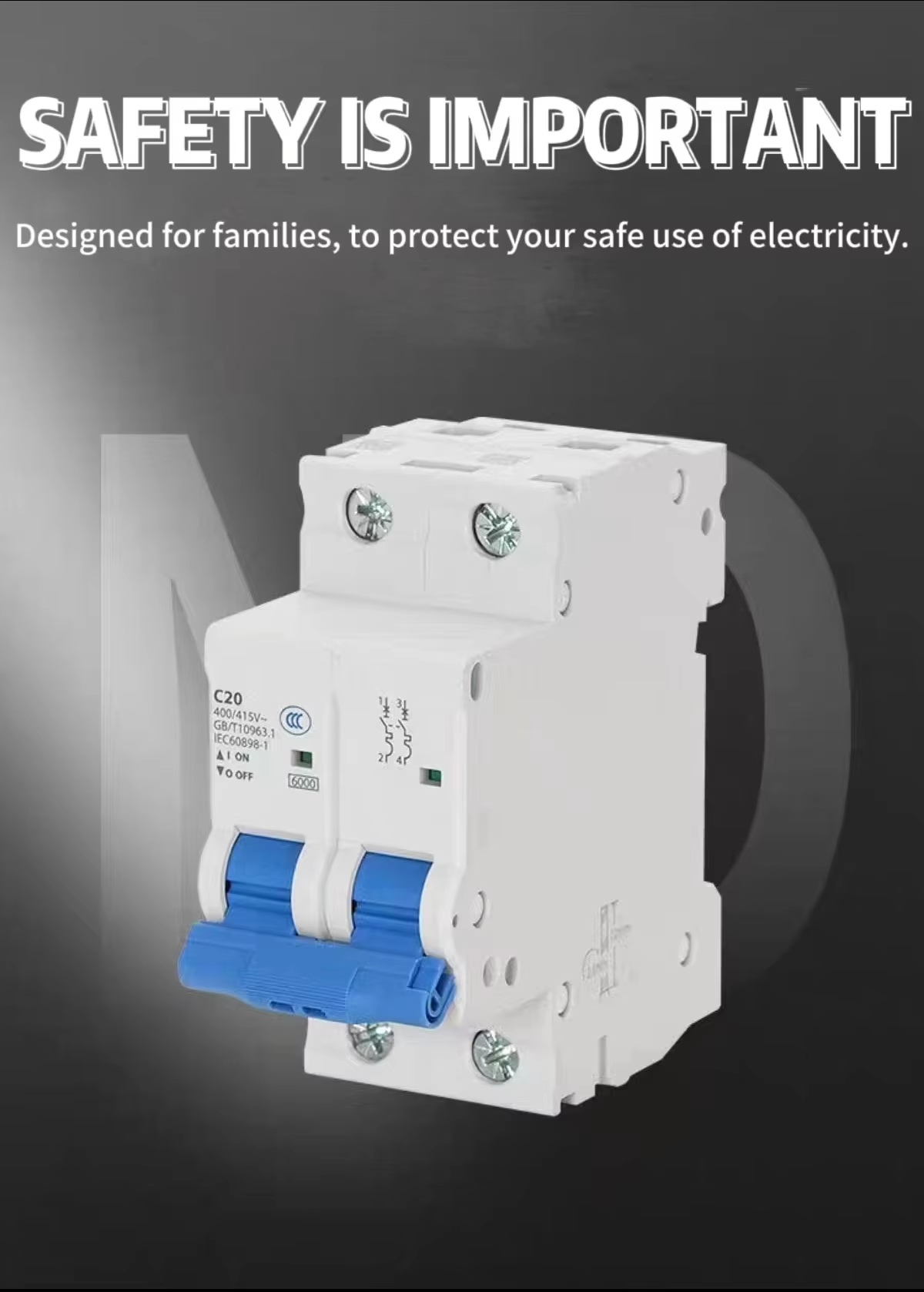
Selecting the right circuit protection device for electrical systems operating at 480 volts requires careful consideration of both safety requirements and operational efficiency. A 2-pole 480V breaker serves a specific purpose in industrial and commercial electrical installations, yet many facility managers and electrical engineers struggle to determine when this configuration is truly necessary versus when alternative protection schemes would be more appropriate. Understanding the precise scenarios that call for a 2-pole 480V breaker helps prevent both under-protection that compromises safety and over-specification that wastes budget resources.
The decision to implement a 2-pole 480V breaker hinges on understanding the fundamental electrical characteristics of your load, the system grounding configuration, and the specific protection requirements mandated by electrical codes. These breakers are designed to simultaneously interrupt current flow in two conductors when a fault or overload occurs, making them essential for certain applications while potentially unnecessary for others. This article examines the technical conditions, operational contexts, and safety considerations that determine when a 2-pole 480V breaker becomes the optimal choice for your electrical protection strategy.
Understanding the Electrical Context for 2-Pole Breaker Applications
Single-Phase Loads on 480V Systems
The primary application scenario for a 2-pole 480V breaker involves protecting single-phase loads connected to a 480-volt system. In typical three-phase industrial environments, single-phase equipment may draw power from two of the three phase conductors, creating a line-to-line voltage of 480 volts. This configuration requires simultaneous disconnection of both conductors serving the load to ensure complete circuit isolation during maintenance or fault conditions. The 2-pole 480V breaker provides this dual-conductor interruption capability in a single compact device.
Common equipment operating on single-phase 480V includes smaller heating elements, specific motor drives, and lighting systems designed for high-voltage applications. When these loads are substantial enough to warrant individual circuit protection rather than being grouped with other equipment, a dedicated 2-pole 480V breaker becomes necessary. The breaker must be rated appropriately for both the continuous current draw and the potential inrush characteristics of the connected load.
The advantage of using a 2-pole configuration in these applications extends beyond basic protection. Because both poles are mechanically linked and trip simultaneously, the breaker ensures that no single conductor remains energized after a fault condition. This characteristic is particularly important for equipment maintenance safety, as it eliminates the possibility of a technician encountering unexpected voltage on what appears to be a de-energized circuit. The simultaneous disconnection also prevents potential damage to equipment that might occur if only one supply conductor were interrupted while the other remained energized.
System Grounding Configurations That Require 2-Pole Protection
The grounding configuration of your electrical system significantly influences whether a 2-pole 480V breaker is appropriate for your application. In ungrounded or resistance-grounded 480V systems, both current-carrying conductors feeding a load may require simultaneous interruption to ensure proper isolation. Unlike solidly grounded systems where one conductor maintains a relatively stable voltage reference to ground, ungrounded systems allow both conductors to float relative to ground potential, making two-pole disconnection essential for safety.
Facilities operating corner-grounded delta systems at 480 volts present another scenario where 2-pole breakers become necessary. In these configurations, one phase conductor is intentionally grounded, but circuits derived from the two ungrounded phases still require dual-pole protection. The 2-pole 480V breaker ensures that both ungrounded conductors are simultaneously disconnected, preventing any possibility of continued energization through alternative current paths that might exist in complex industrial wiring systems.
Understanding your system grounding method is fundamental to making the correct breaker selection decision. Consulting your facility's electrical one-line diagrams and verifying the grounding approach with a qualified electrical engineer helps ensure that the protection strategy aligns with both safety requirements and operational needs. In many cases, the local electrical inspector or authority having jurisdiction can provide guidance on whether specific applications require two-pole protection based on the installed grounding system configuration.
Load Characteristics That Determine Breaker Pole Requirements
Resistive Versus Inductive Load Considerations
The electrical characteristics of your connected load play a crucial role in determining when a 2-pole 480V breaker is the appropriate choice. Purely resistive loads such as electric heating elements draw current that remains in phase with the applied voltage, creating relatively straightforward protection requirements. When these resistive loads operate on single-phase 480V power, a 2-pole 480V breaker provides the necessary overcurrent protection while maintaining the mechanical advantage of simultaneous pole operation.
Inductive loads including motors, transformers, and solenoids present more complex considerations. These devices create magnetic fields during operation, causing current to lag behind voltage and generating higher inrush currents during startup. A 2-pole 480V breaker selected for inductive load protection must account for these characteristics through appropriate instantaneous trip settings and thermal overload curves. The breaker must tolerate momentary high currents during motor starting while still providing reliable protection against sustained overloads and short-circuit faults.
Certain motor applications operating on single-phase 480V supply explicitly require 2-pole protection to ensure proper disconnection of both supply conductors. This requirement becomes particularly important for motors rated above one horsepower, where the potential for continued rotation due to residual magnetism or mechanical momentum creates safety hazards. The 2-pole 480V breaker eliminates these risks by guaranteeing complete electrical isolation when the protection device operates.
Current Rating and Available Fault Current Analysis
Determining when to use a 2-pole 480V breaker requires careful analysis of both the continuous current requirements and the available fault current at the installation point. The breaker's continuous current rating must exceed the full-load current of the connected equipment by an appropriate margin, typically 125% for continuous loads according to electrical code requirements. This sizing ensures that the thermal trip mechanism does not nuisance trip during normal operation while still providing reliable overload protection.
The interrupting rating of the 2-pole 480V breaker must equal or exceed the available short-circuit current at the point of installation. Industrial facilities operating at 480 volts often have substantial fault current availability, particularly on circuits close to the main service entrance or large transformers. A breaker with insufficient interrupting rating poses serious safety hazards, as it may fail catastrophically when attempting to clear a high-magnitude fault. Engineering analysis using system impedance data helps determine the maximum fault current and ensures appropriate breaker selection.
In applications where available fault current approaches or exceeds standard breaker interrupting ratings, a 2-pole 480V breaker with higher AIC (amperes interrupting capacity) ratings becomes necessary. These enhanced-capability breakers incorporate heavier contact materials, stronger arc-quenching chambers, and reinforced enclosures to safely interrupt extreme fault currents. The additional cost of high-interrupting-capacity breakers is justified in locations where the electrical system can deliver massive short-circuit currents that would destroy standard protection devices.
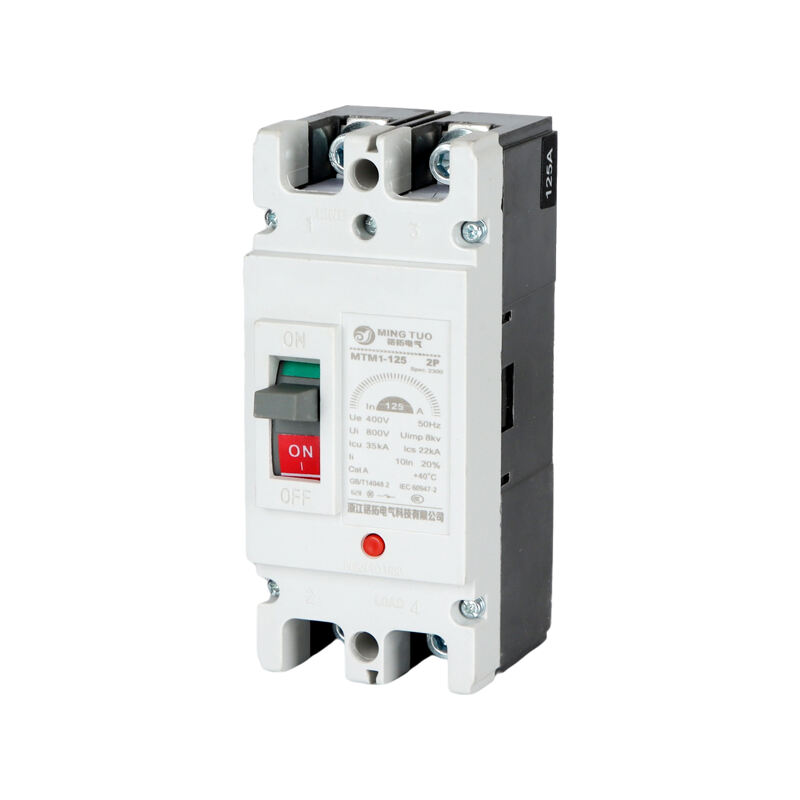
Regulatory Requirements and Code Compliance Factors
National Electrical Code Mandates for Multi-Pole Protection
The National Electrical Code establishes specific requirements that dictate when multi-pole breakers must be used in electrical installations. Article 210 addresses branch circuit requirements, while Article 430 governs motor circuit protection, both containing provisions that influence the decision to implement a 2-pole 480V breaker. Understanding these code requirements ensures that your protection strategy meets legal obligations while maintaining safe operating conditions.
For multiwire branch circuits operating at 480 volts, the NEC requires simultaneous disconnection of all ungrounded conductors. This requirement explicitly calls for a 2-pole 480V breaker or other multipole disconnecting means that operates all poles with a single action. The code recognizes that in multiwire circuits, neutral conductor current results from the imbalance between phase currents, and interrupting only one ungrounded conductor while leaving others energized could create dangerous conditions including neutral conductor overloading.
Motor disconnecting means requirements under NEC Article 430 also influence when 2-pole breakers become necessary. For motors operating on single-phase 480V supply, the disconnecting means must simultaneously disconnect all ungrounded supply conductors. While this requirement can be met through separate devices including manual switches, using a 2-pole 480V breaker that serves as both overcurrent protection and disconnecting means simplifies the installation and reduces component count.
Industry-Specific Standards and Safety Protocols
Beyond general electrical code requirements, industry-specific standards often impose additional criteria that determine when 2-pole protection becomes necessary. The NFPA 70E standard for electrical safety in the workplace establishes requirements for maintaining safe working conditions around energized equipment. These requirements influence decisions about when to implement 2-pole breakers that ensure complete circuit de-energization during maintenance activities.
Manufacturing facilities subject to OSHA regulations must implement lockout-tagout procedures that ensure equipment cannot be re-energized while workers perform maintenance. A 2-pole 480V breaker facilitates compliance with these requirements by providing a single lockable disconnecting point that controls both current-carrying conductors. The mechanical interlocking between poles ensures that partial re-energization cannot occur if someone attempts to override safety protocols.
Certain process industries including chemical manufacturing and petroleum refining operate under additional safety standards that may require enhanced electrical protection beyond minimum code requirements. In hazardous locations classified under NEC Article 500, the need for reliable disconnection of all power sources may necessitate 2-pole breaker applications even in situations where single-pole protection might technically satisfy basic code requirements. Consulting with safety professionals familiar with your specific industry helps identify when enhanced protection strategies including multipole breakers provide risk reduction benefits.
Installation Location and Environmental Considerations
Physical Space Constraints in Electrical Enclosures
The decision to use a 2-pole 480V breaker sometimes emerges from practical space limitations within electrical panels and switchgear. In existing installations where panel capacity is limited, a single 2-pole breaker occupying two panel spaces may represent a more compact solution than alternative protection schemes requiring additional components. Modern molded-case circuit breakers have been engineered for space efficiency, allowing substantial current ratings in relatively compact form factors.
When planning new electrical installations or panel upgrades, considering the total space requirement for all planned circuits helps determine optimal breaker configurations. A 2-pole 480V breaker typically consumes two standard breaker spaces in a panelboard, though some manufacturers offer tandem or slim designs that may fit different space envelopes. Balancing the space efficiency of multipole breakers against the flexibility of single-pole devices requires careful analysis of both current needs and anticipated future expansion.
In industrial control panels housing motor starters and other automated equipment, the use of 2-pole breakers can simplify wiring and reduce the overall panel footprint. By combining overcurrent protection and disconnecting means in a single device, the panel designer eliminates separate disconnect switches and their associated wiring, mounting hardware, and space requirements. This integration becomes particularly valuable in applications where multiple motor circuits require individual protection within a limited enclosure volume.
Environmental Factors Affecting Breaker Selection
Operating environment characteristics significantly influence whether a 2-pole 480V breaker will perform reliably in your specific application. Temperature extremes affect breaker thermal trip characteristics, with high ambient temperatures reducing the effective current-carrying capacity of the device. In applications where the breaker will be installed in high-temperature environments such as near furnaces or in outdoor enclosures exposed to direct sunlight, derating factors must be applied to ensure reliable protection without nuisance tripping.
Moisture, dust, and corrosive atmospheres present additional environmental challenges that affect breaker selection and longevity. While the basic interrupting mechanism of a 2-pole 480V breaker operates reliably across a wide range of conditions, the enclosure and mounting arrangement must provide appropriate environmental protection. In outdoor or corrosive environments, selecting breakers with enhanced enclosure ratings such as NEMA 4X or IP66 ensures long-term reliability despite challenging conditions.
Vibration and mechanical shock common in industrial environments can affect breaker performance, particularly in applications involving reciprocating machinery or mobile equipment. A 2-pole 480V breaker installed in these environments should feature vibration-resistant mounting and contact designs that maintain reliable operation despite mechanical disturbances. Some manufacturers offer breakers specifically rated for high-vibration applications, incorporating enhanced spring pressure and reinforced contact structures that resist premature wear.
Economic and Maintenance Considerations
Cost-Benefit Analysis of 2-Pole Protection
Economic factors play a legitimate role in determining when a 2-pole 480V breaker represents the optimal protection solution. While safety and code compliance remain non-negotiable priorities, understanding the cost implications of different protection strategies helps optimize resource allocation across facility electrical systems. A 2-pole breaker typically costs more than a comparable single-pole device but less than two separate single-pole breakers, creating potential cost advantages in appropriate applications.
The total installed cost of electrical protection extends beyond the breaker purchase price to include labor for installation, panel space costs, and the value of simplified maintenance access. In new construction projects, specifying 2-pole breakers for single-phase 480V loads may reduce overall installation costs by eliminating separate disconnecting means and simplifying circuit documentation. The reduced component count translates to fewer potential failure points and simplified troubleshooting procedures over the system's operational lifetime.
Long-term maintenance costs also factor into the decision about when to use multipole protection. A 2-pole 480V breaker requires coordinated maintenance on both poles, but this actually simplifies preventive maintenance scheduling by ensuring that both poles receive attention during a single maintenance intervention. The mechanical linkage between poles means that contact wear and calibration drift affect both poles similarly, reducing the possibility of imbalanced protection that might occur with separate single-pole devices.
Serviceability and Future System Modifications
Anticipating future electrical system modifications influences the decision about when 2-pole breakers provide the most flexible protection platform. In facilities expecting load growth or equipment changes, the ease of modifying circuits protected by 2-pole breakers affects long-term operational efficiency. These breakers allow straightforward current rating changes by replacing the entire device, though this requires more extensive work than adjusting or replacing a single pole in a distributed protection scheme.
The availability of replacement breakers and compatibility with existing panel hardware affects the practical serviceability of your protection system. Major breaker manufacturers maintain extensive back-catalogs of compatible devices, but discontinued product lines or facility-specific custom panels may create long-term parts availability challenges. When selecting a 2-pole 480V breaker for critical applications, verifying long-term parts availability and identifying suitable alternatives ensures that future replacement needs can be met without extensive panel modifications.
Testing and verification procedures for multipole breakers require appropriate equipment and qualified personnel. A 2-pole 480V breaker should undergo periodic testing to verify proper trip characteristics, contact resistance, and mechanical operation. These tests require specialized equipment capable of injecting test currents into both poles while monitoring individual pole response times. Facilities lacking in-house testing capabilities may need to contract with specialized service providers, adding to the total lifecycle cost of the protection system.
FAQ
Can I use a 2-pole breaker on a three-phase 480V system?
Yes, a 2-pole 480V breaker is specifically designed for use on three-phase systems when protecting single-phase loads or equipment connected between two phase conductors. The breaker protects the two conductors supplying the load while the third phase conductor remains unaffected. However, if you need to protect a true three-phase load operating at 480 volts, you would require a three-pole breaker that simultaneously protects all three phase conductors. The key is matching the breaker pole count to the number of ungrounded conductors serving your specific load.
What happens if I use a single-pole breaker instead of a 2-pole breaker for a 480V circuit?
Using a single-pole breaker on a circuit requiring 2-pole protection creates serious safety hazards and code violations. If a fault occurs, the single-pole breaker would interrupt only one of the two current-carrying conductors, leaving the other conductor energized at 480 volts relative to the interrupted conductor. This creates shock hazards during maintenance and may damage connected equipment. Additionally, single-pole breakers are typically not rated for the line-to-line voltage of 480V systems, meaning the breaker itself could fail catastrophically when attempting to interrupt a fault. National Electrical Code requirements explicitly mandate simultaneous disconnection of ungrounded conductors in applications requiring multipole protection.
How do I determine the correct current rating for a 2-pole 480V breaker?
The correct current rating for a 2-pole 480V breaker depends on the full-load current of the connected equipment and applicable code requirements. For general circuits, select a breaker rated at least 125% of the continuous load current. For motor circuits, NEC Article 430 provides specific sizing requirements based on motor full-load current from code tables, typically requiring breakers sized between 150% and 250% of motor FLC depending on motor type and starting characteristics. Always verify that your selected breaker's continuous current rating exceeds the calculated minimum while ensuring the interrupting rating meets or exceeds available fault current at the installation point. Consulting load manufacturer specifications and performing proper electrical engineering calculations ensures appropriate breaker sizing.
Do all 480V single-phase loads require 2-pole breakers?
Not all 480V single-phase loads absolutely require 2-pole breakers from a pure electrical functionality standpoint, but code requirements and safety considerations make them the standard choice. The National Electrical Code requires that disconnecting means simultaneously open all ungrounded conductors, which effectively mandates 2-pole protection for most 480V single-phase applications. While theoretically two separate single-pole breakers with a common trip mechanism could provide equivalent protection, a purpose-designed 2-pole 480V breaker offers superior reliability, simpler installation, and guaranteed simultaneous operation. The marginal cost difference makes 2-pole breakers the practical standard for virtually all 480V single-phase protection applications in industrial and commercial settings.