 EN
EN

Introduction: The Next Evolution of Solar Infrastructure
As we approach 2026, the solar energy landscape is shifting from "rapid expansion" to "intelligent optimization." The early days of photovoltaic (PV) installations focused primarily on panel efficiency and inverter costs. However, the industry has realized that the true bottleneck for long-term project ROI lies in the Distribution and Protection Network.
Future-proofing a solar project today requires looking beyond basic connectivity. It requires integrated distribution solutions that are "smart," resilient to extreme weather, and optimized for both DC and AC protection. This article explores the key trends that will define solar electrical distribution in 2026 and beyond.
1. The Rise of Smart, Remote-Monitored Circuit Breakers
In 2026, a circuit breaker is no longer just a "dumb" safety switch. The integration of IoT (Internet of Things) into distribution systems is the single biggest trend for B2B solar developers.
Real-Time Health Monitoring
Modern PV distribution units now feature smart MCCBs and ACBs that can communicate:
- Load Profiles: Identifying panels that are underperforming before they fail.
- Temperature Alerts: Detecting loose connections or overheating within the switchgear before an arc occurs.
- Remote Tripping/Resetting: Reducing the need for technicians to visit remote solar sites for simple maintenance tasks.
For Mingtuo, our R&D is focused on making these smart features accessible and reliable, ensuring that "integrated distribution" means "informed distribution."
2. Weatherproof Challenges in Extreme Solar Environments
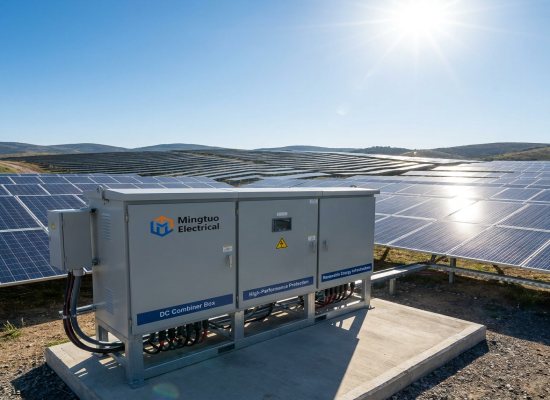
Solar farms are increasingly being built in "marginal lands"—deserts, coastal regions, and high-altitude plains. These environments push electrical enclosures to their limits.
Thermal Management
In desert solar farms, the temperature inside a distribution box can exceed 70°C. Standard plastic enclosures can warp, and circuit breakers can "nuisance trip" due to ambient heat. The 2026 trend is toward Active Thermal Management and the use of high-temperature-rated composite materials that maintain dielectric strength even in extreme heat.
UV and Sand Abrasion
In many markets, "waterproof" isn't enough. Enclosures must be UV-resistant (to prevent embrittlement) and abrasion-resistant (to withstand sandstorms). Mingtuo’s IP67-rated distribution boxes are tested against accelerated UV aging to ensure a 25-year service life, matching the lifespan of the PV panels themselves.
3. The DC vs. AC Protection Dilemma
As solar systems move toward higher voltages (1500V DC is becoming the new standard), the requirements for protection components change drastically.
- DC Side Protection: DC arcs are much harder to extinguish than AC arcs because there is no "zero-crossing" point. The trend is toward specialized DC Circuit Breakers (MCCBs) and surge protective devices (SPD) that can handle sustained high-voltage DC loads without failure.
- AC Side Integration: On the AC side (after the inverter), the focus is on Multi-Inverter Synchronization and high-breaking-capacity ACBs that can handle the combined output of massive PV strings.
Integrated distribution units that house both DC and AC protection in separate, thermally-isolated compartments are becoming the preferred choice for EPC (Engineering, Procurement, and Construction) contractors.
4. Sustainability and "Circular" Manufacturing
In 2026, the "greenness" of a solar project will be measured by its entire supply chain. B2B importers are increasingly asking for the "Carbon Footprint" of their electrical components.
The trend in manufacturing is toward:
- Recyclable Materials: Using plastics and metals that can be reclaimed at the end of the project's life.
- Energy-Efficient Production: Sourcing from factories (like Mingtuo) that utilize their own solar power and high-efficiency automation to reduce the embodied energy of every circuit breaker produced.
5. Why Mingtuo is the Partner for 2026 Projects
At Mingtuo Electric, we don't just supply parts; we provide integrated energy solutions. Our "Solar Distribution Bundle" includes:
- 1500V DC Protection Units: Specifically designed for utility-scale PV.
- Smart AC Combiner Boxes: Equipped with remote monitoring capabilities.
- Customizable Enclosures: Tailored to the specific environmental challenges of your project site.
Conclusion: Engineering for the Next Decade
The solar projects of 2026 will be more complex, more efficient, and more demanding than those of the past. By adopting integrated distribution trends—smart monitoring, extreme-weather resilience, and specialized DC protection—developers can ensure their power grids remain "future-proof."
As you plan your next-generation energy infrastructure, choose a partner like Mingtuo who is already engineering the solutions for tomorrow.
Table of Contents
- Introduction: The Next Evolution of Solar Infrastructure
- 1. The Rise of Smart, Remote-Monitored Circuit Breakers
- 2. Weatherproof Challenges in Extreme Solar Environments
- 3. The DC vs. AC Protection Dilemma
- 4. Sustainability and "Circular" Manufacturing
- 5. Why Mingtuo is the Partner for 2026 Projects
- Conclusion: Engineering for the Next Decade