 EN
EN


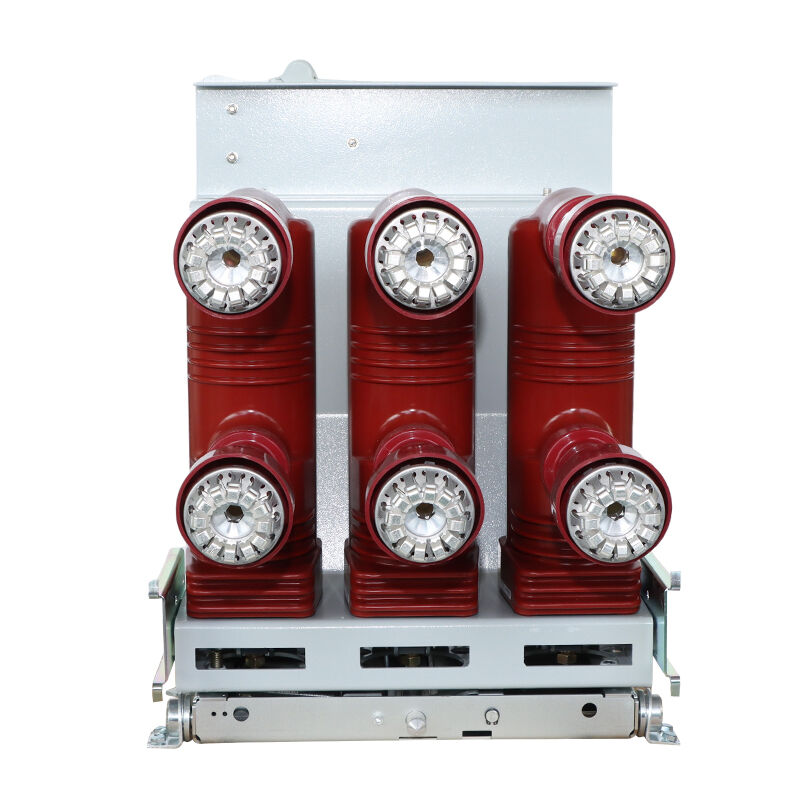
In medium-voltage power distribution systems today, vacuum circuit breakers (VCBs) are indispensable elements of the electrical safety, reliability, and fault interruption capabilities of the systems. Of the various structural forms of vacuum circuit breakers, the VCP breaker has become renowned due to its minimalist design, remarkable performance, and suitability for diverse industrial settings. However, the question is, what makes a VCP breaker different from other VCBs? Why are more engineers and procurement personnel opting for the VCP breaker to meet the challenges of electrical environments?
Getting to Know the VCP Breaker
The term, VCP breaker, describes an optimized type of vacuum circuit breaker (whose long form can be either vacuum circuit breaker with contact pressure or vacuum contactor platform depending on manufacturer terminology) featuring a modular, compact pole, and mechanism assembly. Even though all VCBs employ vacuum interrupters for arc extinction, a VCP design principally intends to enhance the mechanical effectiveness, insulation configuration, and maintainability.
Simply put, a VCP breaker is fundamentally a vacuum circuit breaker—but one that has been internally restructured to a certain extent to produce a newly improved product with enhanced performance, smaller footprint, and higher operational stability.
Main Disparities between VCP Breakers and Conventional VCBs
1. Structural Form and Compactness
With conventional VCBs, physical linkage mechanisms are typically larger and insulating spacing is also greater. Conversely, the VCP breaker version consists of:
- Modular vacuum interrupter poles
- Drive mechanism optimization and alignment
- Phase-to-phase spacing minimized
- Compact epoxy/composite insulation system.
Therefore VCP breakers require a much smaller footprint, which is an essential factor for modern switchgear cabinets where space is a premium.
For example, Zhejiang Mingtuo, among others, is known for their commitment to compact engineering in their VCP lines. This indeed reinforces the recently developing trend of miniaturized substations and intelligent distribution panels.
2.Mechanical Efficiency, Driving Mechanism
The core difference lies in the operating mechanism design.
Simple VCBs may work with spring-charged mechanisms that are mechanically more complex requiring calibration regularly. VCP breakers instead are often of the type:
- Simplified versions of spring-charged or magnetic actuators
- Less moving parts
- Better energy transfer to vacuum interrupters.
Such changes are also indispensable for industrial environments, where switching frequency is high.
3. Thermal and Electrical
Both VCB and VCP breakers employ vacuum interruption technology but internally optimized VCP models lead to better heat dissipation and contact stability.
Key benefits:
- Improved arc energy distribution
- Lower contact erosion
- Enhanced dielectric recovery post interruption.
Normally, this means that VCP breakers have higher durability when exposed to repetitive short-circuits than the classic VCB ones.
4. Maintenance
There is no doubt that maintenance is one of the main factors of focus in power distribution systems. Traditional VCBs are likely to need mechanical re-adjustment and inspection on a regular basis.
However, a VCP breaker significantly reduces this workload since it:
- Pole structures in sealed or semi-sealed
- Lubrication points greatly reduced
- Components lifecycle mechanical extended.
So, contrary to traditional VCBs, ones equipped with VCP technology have fewer problems and maintenance downtime as well as running costs are minimized. Zhejiang Mingtuo, among others, emphasizes low-maintenance design, which is that aspect which attracts manufacturers, data centers, and infrastructures most.
5. Application Flexibility
Recently, VCP breakers have become very common in:
- Industrial power distribution
- Commercial building switchgear
- Renewable energy substations
- Mining and heavy-duty environments
Unlike traditional VCBs, VCPs are the more favorable choice for the compact switchgear assemblies and modular electrical cabinets.
This means they can be comfortably used for retrofitting and new installations.
6. Safety and Reliability
Vacuum switching technology is the best argument for safety. Nevertheless, VCP breakers enhance reliability by:
- More improved insulation coordination
- Better phase isolation design
- More robust mechanical locking systems
- Less mechanical failure
Such features guarantee a more stable performance during fault conditions. This is very important in avoiding the domino effect of system failures.
Reasons Why Industries Are Choosing VCP Breakers
Several modern engineering trends give a strong push to the adoption of VCP breakers:
- Requirement for compact substations
- Rising power system automation
- Demand for better uptime and reliability
- Need to cut down on maintenance costs
- Smart grid integration.
Therefore, VCP breakers cannot be looked at just as alternatives, but in fact, they are the new standard in various medium-voltage applications.
Manufacturers Such as Zhejiang Mingtuo
Zhejiang Mingtuo and similar companies contribute greatly to the development of VCP breaker technology. They do this, for example, via:
- Enhanced manufacturing accuracy
- Upgraded raw material choice
- Unified modular designs
- Rigorous quality assurance systems
These solutions make VCP breakers available and reliable for the worldwide market.
Their development path is a demonstration of a larger industry movement toward electrical distribution solutions that are smart, safe, and compact.
Conclusion
From the vacuum interruption point of view, a VCP breaker is no different from a standard VCB. Nevertheless, it is the engineering finesse that makes all the difference. The more compact build, better mechanical performance, less maintenance, and increased reliability are the main factors through which VCP breakers could be considered as representing a new generation in medium-voltage switching equipment.
With the constant evolution of power systems, suppliers like Zhejiang Mingtuo are at the forefront of this change by manufacturing products that are in line with the modern requirements of efficiency, safety, and scalability.
Industries that aim for eternal reliability and fine electrical infrastructure undoubtedly see the VCP breaker as the experienced intelligent choice.