 EN
EN


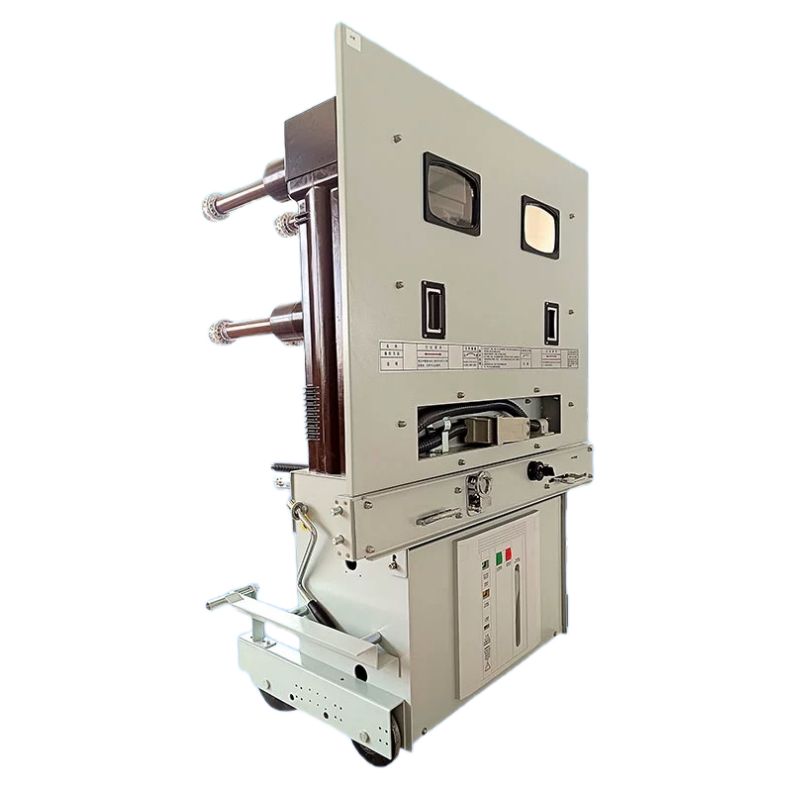
Choosing the correct circuit breaker is a very important decision when you are designing an electrical system or upgrading an existing one. ACB and VCB breakers are among the most commonly used high-capacity protection devices in industrial, commercial, and infrastructure projects. But which one of the two would be the best fit for your system? A better understanding of how they work, what their features are, and where they are most appropriately used can help you be a smarter, safer, and more economical buyer.
Getting to Know Basic Differences Between ACB and VCB Breaker Technology
An Air Circuit Breaker (ACB) uses the ambient air as its cooling and arc-quenching medium during the breaking process. For example, if there is a fault, the circuit breaker will first open its contacts and the resultant arc is then cooled and quenched by the air. ACBs find their primary application in LV systems, and they are noted for their ruggedness and ease of maintenance.
On the other hand, a Vacuum Circuit Breaker (VCB) relies on a vacuum interrupter to extinguish the arc. As the arc quenches itself very rapidly and efficiently by the absence of any medium like air or oil inside the interrupter, the vacuum thus plays a key role. Typically, VCBs are employed in MV systems and recognized for their compactness and durability.
ACB and VCB are both breaker types used in electrical protection systems, but each is suitable for different voltage levels and has different features.
Main Differences Between ACB and VCB Breaker
Different voltage levels of application is the main difference between an ACB and a VCB breaker. ACBs are normally used in low-voltage electrical systems (up to 690V) and therefore are ideal for main distribution panels, generators, and large motors. VCBs are designed for medium-voltage systems and generally operate at voltages from 3.3kV to 36kV; thus, they are used in substations and industrial power distribution.
Another aspect that ACBs and VCBs differ greatly in is maintenance and lifespan.Contact wear and exposure to the arc are the reasons why ACBs have to be looked at and maintained regularly. With VCBs, since they consist of vacuum interrupters sealed in a metal casing, there is little or no maintenance required, and they last longer while still giving good performance.
As far as size and installation are concerned, VCBs are generally more compact and lighter when compared with their voltage class counterparts, while ACBs are bigger but integration into low-voltage switchgear assemblies is usually easier with them.
Performance and Safety Considerations
In terms of protection of the electrical system, whether you use an ACB or a VCB breaker, you will get reliable protection against short-circuit and overload. VCBs, however, are best suited to situations where a lot of switching operations are required. The very fast quenching of the arc in the vacuum means that wear of the contacts is almost negligible, and hence, the breaker can safely operate over thousands of switching cycles.
On the other hand, ACBs have a number of additional features that allow them to be more protective, such as adjustable trip settings and communication capabilities, which, in turn, makes them highly adaptable in smart power distribution systems. Ports for detailed monitoring and coordination at the plant level are another aspect that makes ACBs an always-in-demand choice.
Companies such as Zhejiang Mingtuo not only focus on safety, but they also put a lot of emphasis on durability and intelligent control thus producing ACB and VCB breaker products that comply with modern electrical standards.
Cost and Long-Term Value
As far as the initial cost is concerned, using ACBs for low-voltage applications is generally cheaper. The price of VCBs can be on the high side initially, but when you take into account the lower maintenance costs and longer service life, it turns out that you will be spending less money on them on the whole.
Choosing between an ACB and VCB breaker should not be based on price alone. Look at other factors such as system voltage, operating frequency, environmental conditions, and future expansion plans. The breaker that fits well in the system will be more reliable and result in less downtime which ultimately means more money saved.
Which One Should You Choose?
What should be your pick then – an ACB or VCB breaker to protect your electrical system? Other things being equal, the choice basically boils down to the characteristics of the specific application:
- Using an ACB is a good idea if you have a low-voltage distribution system, require adaptable protection settings, and prioritize on-site maintenance.
- VCB is your best option if you have medium voltage system, the system needs to be highly reliable with frequent switching and you also want minimum maintenance.
After careful consideration of these factors, if you also get professional manufacturers like Zhejiang Mingtuo on board, you can be pretty sure that your electrical setup will have the best, most efficient, and most suitable protective device.
Conclusion
We rely heavily both on ACB and VCB breaker technologies in power systems nowadays and thus both are very important. In fact, it is best to avoid a debate between these two types and rather, see them as complementary solutions used in different electrical situations.Coming up with the right decision will boost safety and performance and will, at the same time, support the long-term stability of your power infrastructure.