 EN
EN


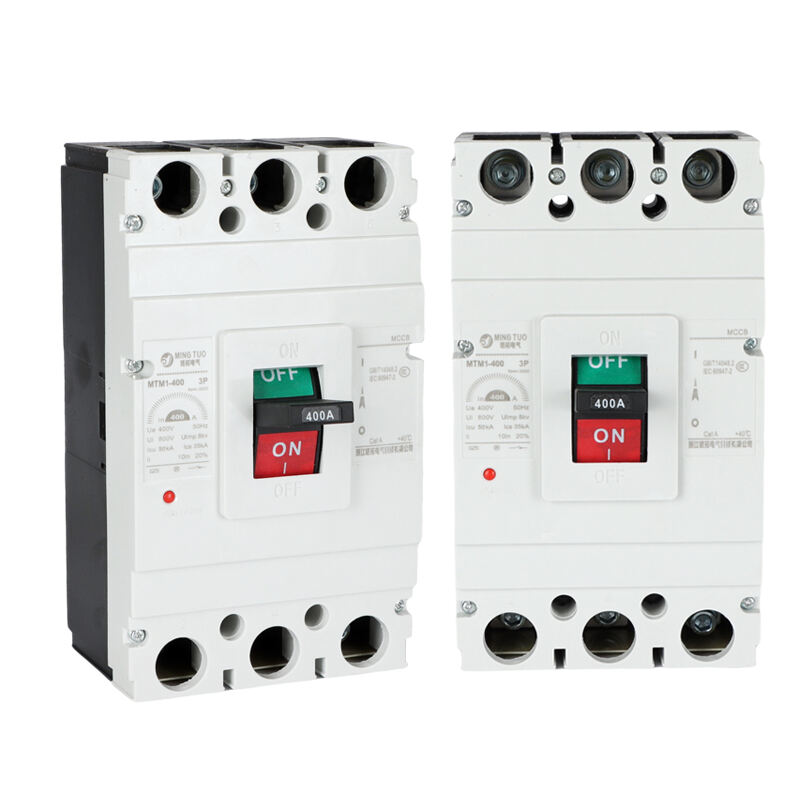
You achieve safe circuits by choosing the right Molded Case Circuit Breakers, installing them correctly, inspecting them regularly, and following industry standards. Recent tests show that unreliable brands can fail up to 50% of the time due to improper use, which increases your risk of electrical hazards. Proper installation and maintenance prevent most accidents, as shown below:
|
Evidence Type |
Percentage |
Description |
|---|---|---|
|
Electrical Accidents |
80% |
Occur during equipment installation and maintenance activities, highlighting the importance of proper procedures. |
Avoid common mistakes by adhering to safety guidelines. You can trust mingtuo for reliable MCCB solutions.
Key Takeaways
-
Choose the right MCCB by assessing your circuit's current, voltage, and environmental conditions to ensure safety.
-
Install MCCBs correctly by following manufacturer guidelines and ensuring proper connections to prevent overheating and failures.
-
Inspect and maintain MCCBs regularly to catch issues early, ensuring reliable protection and avoiding costly downtime.
-
Understand the difference between 80% and 100% rated MCCBs to select the best option for your load requirements.
-
Consult a professional electrician for installation and troubleshooting to ensure compliance with safety standards.
Molded Case Circuit Breakers Overview
What Are MCCBs
You rely on Molded Case Circuit Breakers to protect electrical circuits in demanding environments. These devices serve as high-capacity protection solutions for industrial and commercial applications. Unlike standard circuit breakers, MCCBs offer adjustable trip settings and handle current ratings up to 2,500 amps. Standard circuit breakers, such as MCBs, suit residential use and feature fixed settings with lower current ratings. The table below highlights the main differences:
|
Feature |
Molded Case Circuit Breaker (MCCB) |
Standard Circuit Breaker (MCB) |
|---|---|---|
|
Current Rating |
15 – 2,500 amps |
0.5 – 125 amps |
|
Trip Settings |
Adjustable |
Fixed |
|
Typical Applications |
Industrial, commercial mains |
Residential, light commercial |
How MCCBs Protect Circuits
Molded Case Circuit Breakers play a vital role in electrical safety. You use them to interrupt electrical current during overloads, short circuits, and ground faults. MCCBs safeguard motors, transformers, and generators in complex systems. Their protection mechanisms include:
-
Stopping high current flow instantly during short circuits
-
Detecting ground faults to prevent arcing and equipment damage
-
Tripping during overloads using a bimetallic strip that responds to excessive current
Tip: Regular inspection of MCCBs helps you maintain reliable protection and avoid costly downtime.
Key Features and Benefits
You benefit from several advanced features when you choose Molded Case Circuit Breakers for your facility. MCCBs offer current limiting, adjustable settings, and compliance with international standards such as UL, NEMA, and ANSI. Their compact design fits limited spaces, while durable construction withstands harsh conditions. The table below summarizes key advantages:
|
Feature/Benefit |
Description |
|---|---|
|
Enhanced Safety |
TUV certification reduces electrical hazards |
|
Energy Efficiency |
High-quality components minimize power losses |
|
Long Lifespan |
Durable build lowers maintenance needs |
|
Overcurrent Protection |
Reliable defense against overloads and short circuits |
|
Reusability |
Resettable after tripping, reducing downtime |
|
Adjustable Settings |
Customizable for specific needs |
|
Compliance with Standards |
Meets global safety and performance requirements |
You see Molded Case Circuit Breakers used in manufacturing, data centers, and mining operations. Their versatility and reliability make them essential for safe and efficient power distribution.
Applications of Molded Case Circuit Breakers
Commercial and Industrial Use
You find Molded Case Circuit Breakers in many commercial and industrial environments. These devices play a crucial role in motor control centers, switchgear, and panelboards. You rely on them to protect motors, welding machinery, generators, capacitor banks, and electric feeders. Their ability to handle heavy-duty protection needs makes them essential for safe and reliable electrical infrastructure.
-
Motors: You use MCCBs to manage inrush currents and prevent overload damage.
-
Welding Machinery: MCCBs provide reliable protection for high-current welding machines.
-
Generators: You safeguard generators and connected circuits from faults.
-
Capacitor Banks: MCCBs help manage current flow for power factor correction.
-
Electric Feeders: MCCBs act as the main breaker for high current loads.
Industry trends show that advanced technologies are enhancing system reliability. Automation is creating new opportunities for MCCB manufacturers. You see a growing focus on energy efficiency and safety standards. The adoption of smart circuit breakers with IoT integration is increasing. Investments in renewable energy and grid modernization are driving demand for advanced MCCBs, especially in the Asia Pacific region.
Motor and Circuit Protection
You depend on Molded Case Circuit Breakers for motor and circuit protection in industrial settings. MCCBs provide instantaneous short-circuit protection through magnetic-only mechanisms. Overload relays cover prolonged overcurrent situations, ensuring comprehensive protection. You benefit from thermal protection that prevents overheating during sustained overloads. MCCBs use magnetic mechanisms for rapid response to short circuits, protecting motors from severe damage. Advanced models monitor phase balance, preventing damage from uneven power distribution.
-
Industrial Motor Control Centers: MCCBs protect circuits feeding heavy motors and machinery.
-
Manufacturing Lines: MCCBs ensure safe operation of motors in continuous production environments.
-
HVAC Systems: MCCBs provide protection for motors driving chillers and other HVAC equipment.
Low and High Voltage Applications
You apply Molded Case Circuit Breakers in both low and high voltage circuits. The table below highlights key differences:
|
Aspect |
Low Voltage Circuit Breakers |
High Voltage Circuit Breakers |
|---|---|---|
|
Location |
Installed indoors in electrical rooms, panels, or motor control centers. |
Located outdoors or in specially built substations. |
|
Design |
Compact designs with standard mounting hardware for easy installation. |
Larger designs handle environmental factors like extreme temperatures and UV exposure. |
|
Functionality |
Protective devices for smaller circuits. |
Protects transmission lines and substations, critical for system stability and reliability. |
|
Speed of Operation |
May take several cycles to clear a fault. |
Must act within 2–3 cycles to ensure quick fault clearance. |
Note: You should select the right MCCB based on your voltage requirements and installation environment to ensure optimal protection and system reliability.
Safe Circuit Steps with MCCBs
Selecting the Right MCCB
You must select the correct Molded Case Circuit Breaker to ensure circuit safety and reliability. Follow these steps to make an informed choice:
-
Determine the rated current. Calculate the maximum continuous load current and choose an MCCB with a rating equal to or slightly higher.
-
Assess environmental conditions. Evaluate the installation location and select an MCCB designed for those specific conditions.
-
Calculate the interrupting capacity. Identify the maximum prospective short-circuit current and ensure the MCCB meets or exceeds this value.
-
Verify the rated voltage. Confirm that the MCCB’s working voltage matches your system requirements.
-
Choose the number of poles. Select the appropriate number based on whether your circuit is single-phase or three-phase.
-
Select the tripping characteristic. Match the tripping curve to your load type for optimal protection.
-
Identify additional features. Consider requirements such as remote operation, auxiliary contacts, or communication capabilities.
-
Ensure compliance. Check that the MCCB meets relevant standards and local regulations.
-
Confirm physical size and mounting. Make sure the MCCB fits the available space and mounting hardware.
Tip: Always consult the manufacturer’s datasheet and local codes before finalizing your selection.
Sizing and Compatibility
Proper sizing guarantees that your MCCB will protect your system without nuisance tripping or catastrophic failure. You need to calculate the full load current based on your equipment’s power rating. Select a breaker rating slightly above the load current to avoid unnecessary trips. Check the short-circuit capacity to ensure the MCCB can withstand the highest fault current at the installation point. Match the system voltage and number of poles to your application. Consider the installation environment, including temperature and humidity, as these factors can affect performance. Choose protection features that suit your needs, such as thermal-magnetic or electronic trip units.
-
Load current
-
Breaker trip rating
-
Short-circuit capacity
-
Voltage
-
Number of poles
-
Installation environment
-
Protection features
Note: Breaking capacity must always exceed the prospective fault current to prevent damage and ensure safety.
80% vs. 100% Rating Selection
You must understand the difference between 80% and 100% rated MCCBs to choose the right breaker for your application. The table below summarizes when to select each type:
|
Breaker Type |
When to Choose |
|---|---|
|
80% Rated |
Mixed loads (some continuous, some non-continuous) |
|
100% Rated |
High continuous loads (e.g., industrial machinery) |
Tip: For high continuous loads or compact panels, select a 100% rated MCCB to ensure safe operation.
Installation Guidelines
You must follow precise installation procedures to maximize safety and performance. Begin by verifying that the MCCB matches your system’s voltage, current, and fault level requirements. Mount the MCCB securely in the designated panel or enclosure. Connect the incoming and outgoing wires according to the manufacturer’s instructions. Tighten all terminals to the specified torque to prevent overheating. Ensure proper clearance around the MCCB for ventilation. Label the breaker clearly for identification and future maintenance.
-
Use only approved mounting hardware.
-
Avoid placing MCCBs near sources of excessive heat or moisture.
-
Double-check all connections before energizing the circuit.
Alert: Improper installation can lead to overheating, nuisance tripping, or even electrical fires.
Inspection and Maintenance
You need to inspect and maintain MCCBs regularly to ensure optimal performance and safety. Exercise the MCCB at least once a year to prevent dust accumulation and mechanical sticking. Perform routine trip testing every three to five years, depending on operational conditions. Check for signs of wear, corrosion, or overheating. Clean the MCCB and surrounding area to prevent dust buildup. Replace any damaged components immediately.
-
Annual exercising prevents dust-related failures.
-
Trip testing every three to five years verifies protection mechanisms.
-
Visual inspections catch early signs of trouble.
Note: Document all inspection and maintenance activities for compliance and future reference.
Safety Recommendations
Troubleshooting Issues
You may encounter several issues when working with Molded Case Circuit Breakers. Start by inspecting the device for visible problems. Look for signs of overheating, such as discoloration or a burnt smell. Upsize the breaker or reduce connected loads if you notice overheating. Clean away any debris contamination to maintain proper function. Replace broken parts immediately to avoid further damage. If you find moisture inside the enclosure, dry out the MCCB and check for proper sealing.
When you experience tripping issues, reduce the load or select a breaker with a higher current rating for overloads. For short circuits, check for aging wires and replace defective components. Repair insulation on damaged equipment if leakage occurs. If the breaker will not close, replace the undervoltage release coil or clean stuck parts. High temperatures often require you to re-tighten wiring screws or replace worn contacts. Abnormal noise signals the need to clean oil stains or replace broken components. Always perform visual inspections and use testing methods like continuity checks and thermal imaging to confirm issues.
Avoiding Common Mistakes
You can prevent many problems by following best practices during installation and maintenance. Regularly check the tightness of all bolted connections with a calibrated torque wrench. Manually operate the MCCB at intervals to keep it from seizing. Use infrared thermography to detect loose connections and overheating. Perform insulation resistance tests to verify the integrity of the device. These steps help you avoid common installation errors and ensure safe operation.
Safety Tips
|
Safety Tip |
Description |
|---|---|
|
De-Energize Before Servicing |
Disconnect power before accessing internal components. |
|
Use PPE |
Wear insulated gloves and eye protection when working on MCCBs. |
|
Follow Manufacturer Guidance |
Consult manuals for model-specific instructions. |
|
Ensure Proper Coordination |
Coordinate MCCBs with other protection devices. |
|
Check Ratings |
Verify the ampere rating matches the protected circuit. |
You should also test your circuit breaker monthly using the test button. Never operate electrical equipment with wet hands or bare feet. Disconnect power before repairs and use insulated tools. Replace damaged cables immediately and avoid working near conductors on windy days.
When to Call a Professional
You should consult a professional electrician for the installation or troubleshooting of Molded Case Circuit Breakers. This ensures safety, compliance with electrical codes, and proper handling of complex systems. A qualified expert can identify hidden faults and recommend the best solutions for your facility.
mingtuo MCCB Solutions
mingtuo Product Advantages
You want circuit protection that you can trust. Mingtuo delivers Molded Case Circuit Breakers built with high-quality materials and advanced technology. This approach gives you a product with a long service life and stable performance. Each MCCB undergoes a strict 72-hour testing process before shipment. This ensures that you receive a reliable device every time. You also benefit from a 5-year product warranty, which adds extra peace of mind.
Mingtuo designs its MCCBs to meet global standards. You can see the certifications and compliance standards in the table below:
|
Certification/Standard |
Description |
|---|---|
|
ANSI NEMA AB 3 2013 |
Covers molded-case circuit breakers up to 1,000 V ac and 1,200 V dc with high interrupt ratings. |
|
Lloyd's Register |
Shipping approval from the UK. |
|
Bureau Veritas |
Shipping approval from France. |
|
DNV |
Shipping approval from Norway. |
|
CCS |
Shipping approval. |
|
American Bureau of Shipping |
Shipping approval from the USA. |
|
CE Marking |
Compliance with European standards. |
|
CCC |
China Compulsory Certification. |
|
RoHS Compliance |
Restriction of hazardous substances. |
You can rely on mingtuo MCCBs for both safety and compliance in demanding environments.
Support and Resources
You receive more than just a product when you choose mingtuo. The company provides a full range of support and resources to help you succeed. Professional technicians and after-sales personnel stand ready to assist you with technical questions or installation challenges. Mingtuo ensures that every order arrives safely, using reliable packaging and prompt delivery.
|
Type of Support/Resource |
Description |
|---|---|
|
Professional Technical Support |
Access to skilled technicians and after-sales staff for guidance and troubleshooting. |
|
Product Quality Assurance |
High-quality materials and strict testing guarantee reliability. |
|
Reliable Packaging and Delivery |
Careful packaging and fast shipping protect your investment and ensure satisfaction. |
Tip: You can contact mingtuo’s support team at any stage, from product selection to ongoing maintenance. This commitment to service helps you maintain safe and efficient circuits.
You gain a partner in electrical safety when you choose mingtuo for your MCCB needs.
You ensure safe circuits by selecting the right Molded Case Circuit Breaker, installing it correctly, and performing regular inspections. The table below highlights essential safety features:
|
Safety Feature |
Description |
|---|---|
|
Thermal Overload Protection |
Utilizes a bimetallic strip that bends under heat to trip the breaker during overloads. |
|
Magnetic Short-Circuit Protection |
Employs a magnet that reacts to current spikes, quickly tripping the circuit to prevent damage. |
You reduce electrical hazards by following standards such as IEC 60947-2, NEC Article 240, and OSHA 1910 – Subpart S. Trusted brands like mingtuo help you meet these requirements. You stay updated by reviewing guides and participating in safety drills. For best results, you should:
-
Inspect MCCBs regularly.
-
Rely on qualified personnel for maintenance.
-
Use ongoing training resources.
FAQ
What is the main function of a Molded Case Circuit Breaker?
You use a Molded Case Circuit Breaker to protect electrical circuits from overloads, short circuits, and faults. MCCBs automatically disconnect power when they detect unsafe conditions, helping you prevent equipment damage and electrical fires.
How often should you inspect MCCBs?
You should inspect MCCBs at least once a year. Regular checks help you identify wear, corrosion, or overheating early. Document each inspection to maintain compliance and ensure reliable circuit protection.
Can you reset an MCCB after it trips?
You can reset most MCCBs after they trip. First, identify and fix the cause of the trip. Then, switch the breaker back to the ON position. Always follow manufacturer instructions for safe operation.
What standards should MCCBs comply with?
You should select MCCBs that meet standards such as UL, IEC 60947-2, and ANSI. Compliance ensures your breaker provides reliable protection and meets safety requirements for your facility.
When should you call a professional for MCCB issues?
You should contact a licensed electrician if you notice repeated tripping, overheating, or visible damage. Professional help ensures safe installation, troubleshooting, and compliance with electrical codes.